
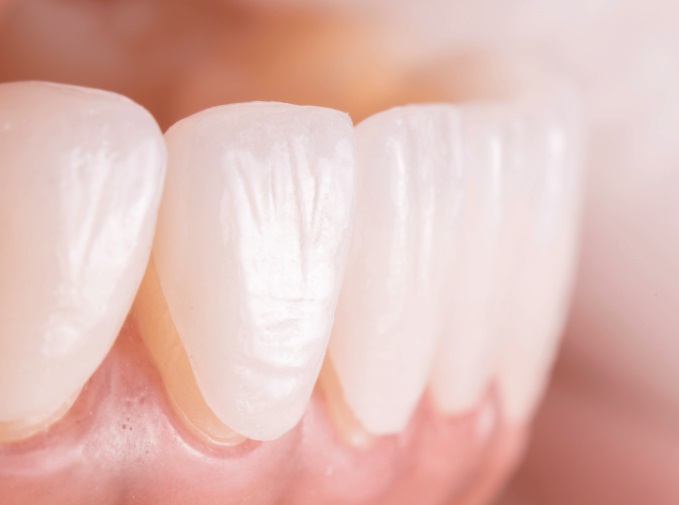
Veneers are one of the treatments people ask about when they want to change the appearance of their front teeth. This article explains what are veneers, the types available, what the procedure involves, and the risks and limitations you should weigh before deciding.
What are Veneers?
Dental veneers are thin shells of porcelain or composite resin custom-made to fit over the front surface of the teeth. They are used to change the appearance of teeth affected by discolouration, chips, gaps and minor irregularities in position.
Veneers are a cosmetic treatment. They change how teeth look. They do not treat decay, gum disease or bite problems, and any such conditions need to be addressed before veneers are considered.
IMPORTANT — most veneer treatment involves permanently removing a layer of enamel from the front of healthy teeth. Enamel does not grow back. Once teeth have been prepared for veneers, they will require veneers or crowns for the rest of your life, and the restorations will need replacing periodically. This is the single most important thing to understand before agreeing to treatment.
Types of Veneers
In cosmetic dentistry there are two main types, porcelain and composite. Each has advantages and drawbacks, and the appropriate choice depends on your teeth and what you want to change.
Porcelain veneers
Porcelain veneers Sydney are made in a dental laboratory and require more than one appointment. They are more resistant to staining than composite and generally more resistant to wear.
Published estimates commonly put the lifespan of porcelain veneers at around 10 to 15 years, though this varies considerably with the individual, the bite, oral hygiene, and habits such as grinding. Some fail earlier. They are not permanent and will need replacing.
Porcelain veneers generally require more enamel removal than composite. Where teeth are severely discoloured, a veneer may mask the discolouration, though heavily stained teeth can show through thin porcelain and may need a different approach.
Composite veneers
Composite veneers Sydney are made from resin applied directly to the tooth, often in a single visit. They cost less than porcelain and generally require less enamel removal, and in some limited cases none at all.
Composite is more prone to staining, chipping and wear than porcelain, and typically has a shorter lifespan. It can usually be repaired or added to, which porcelain cannot.
What veneers can and cannot do
Veneers can change the colour, shape and surface appearance of the front teeth and can close small gaps. Where teeth are only slightly out of position, veneers may make them appear straighter.
Veneers do not move teeth. Where teeth are significantly crowded or the bite is a problem, orthodontic treatment addresses the underlying position, and using veneers instead may mean removing a great deal more enamel than would otherwise be necessary. Your dentist should explain the alternatives, including orthodontics, whitening and composite bonding, and the reasons for recommending one over another.
Veneers do not whiten the natural teeth around them, and their colour cannot be changed once they are made. If you are considering whitening, that is usually done before veneers are matched.
The Procedure
- Initial consultation. Your cosmetic dentist Sydney examines your teeth, gums and bite and takes any necessary X-rays. The purpose is to establish whether veneers are appropriate and to discuss the alternatives. You should receive an explanation of the risks and a written quote.
- A layer of enamel is removed from the front of the teeth being treated. This step is irreversible. For porcelain veneers, an impression or digital scan is taken and sent to a laboratory, and temporary veneers may be fitted in the meantime.
- The teeth are cleaned and etched and the veneers are bonded in place, then adjusted and polished. Local anaesthetic may be used.
Aftercare
- Oral hygiene
Brush twice daily, floss daily and attend regular check-ups and teeth cleaning. The margin where a veneer meets the tooth is a site where decay can start, so hygiene around veneers matters.
- Avoid hard foods and habits
Avoid biting hard objects such as ice, nuts and pen caps, and do not use your teeth as tools. If you grind or clench your teeth, tell your dentist. Grinding is a common cause of veneer failure and a nightguard may be recommended.
- Staining
Porcelain resists staining better than composite, but the bonding margins of both can discolour over time. Limiting coffee, tea, red wine and tobacco helps.
Risks and Limitations
Veneers Sydney are an elective cosmetic treatment and carry risks that should be explained to you before you agree to proceed. These include:
- irreversible removal of enamel, meaning the teeth will need restorations permanently
- tooth sensitivity, which is common after preparation and is usually temporary but can persist
- irritation of the gums, and gum recession over time that can expose the veneer margin
- chipping, cracking or debonding of the veneer, requiring repair or replacement at further cost
- the possibility that a prepared tooth becomes symptomatic and requires root canal treatment or extraction
- colour that cannot be altered once the veneer is made, and that may not match adjacent natural teeth as those teeth age or stain
- a finite lifespan, with replacement needed periodically at ongoing cost
Teeth veneers are not suitable for everyone. They are generally not appropriate where there is active decay or gum disease, insufficient enamel, significant grinding, or where the bite would place excessive force on them.
Veneers at North Sydney Dentistry
Our dentists provide both porcelain and composite veneers. All are registered with the Dental Board of Australia and their registration can be checked on the Ahpra public register.
At your consultation we examine your teeth and gums, discuss what you want to change, explain the options available including those that involve less enamel removal, set out the risks, and provide a written quote. Where veneers are not appropriate for your case, we will tell you.
If you would like to find out whether veneers are suitable for you, contact us to arrange a consultation.